
California Construction Oversight
Owner's Representative Services
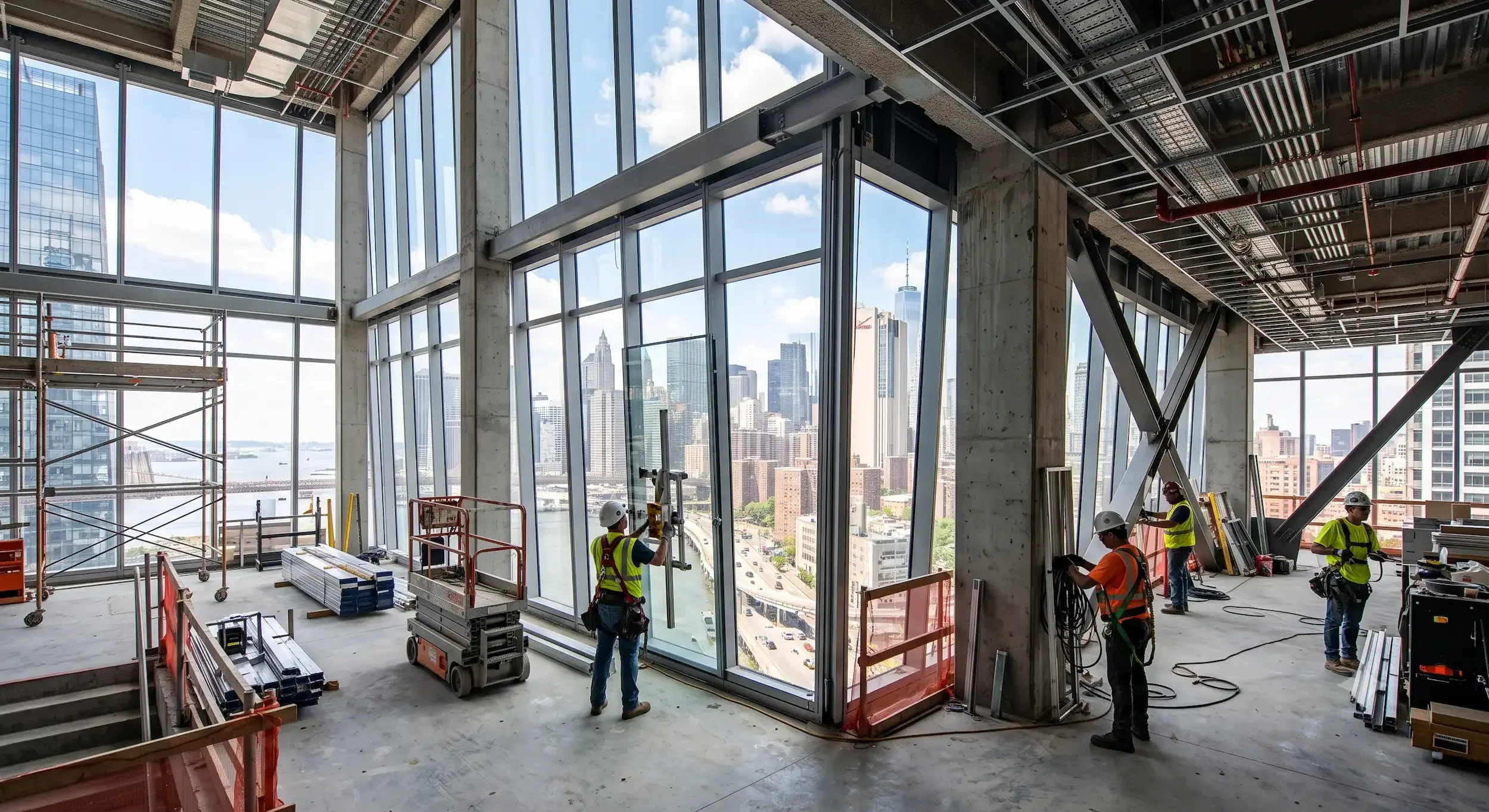
An owner's representative is the one person on a construction project whose only job is protecting your money, your schedule, and your building. We manage the process on your behalf, the architect, the contractor, the budget, and the paperwork, from the first feasibility question through final closeout. We do not hold the construction contract, we do not perform the work, and we do not stamp drawings, which is exactly why we can tell you the truth about all three.

Who hires an owner's rep
Most people who need an owner's representative have never hired one before. If you are about to spend serious money on a building and you are the one accountable for the outcome, this is the role that protects you.
What we actually do, phase by phase
Owner-side construction management is not one job, it is three, and the leverage is heavily front-loaded. The decisions made before anyone breaks ground set the budget you will live with.
- Feasibility: can this project be built for what you want to spend, on the site you have
- Budget development, with the soft costs and contingency people forget
- Selecting and managing the design team
- Bid leveling: putting every contractor bid on the same scope so you are comparing real numbers
- General contractor selection and contract review
- Schedule and budget oversight against the baseline you approved
- Change order review: what is legitimate, what is scope that was always there, what gets pushed back
- Pay application review before you release money
- Site observation and progress documentation
- Quality review against the drawings and specifications
- Punch list development and verification that items are actually completed
- Warranties collected, organized, and in your hands
- Closeout documents: as-builts, O&M manuals, permits, and sign-offs
- Final accounting and retention release review
Owner's rep, general contractor, or architect: who does what
This is the question most first-time owners are actually weighing, and the honest answer is that these are three different jobs. You are likely to have all three. The distinction that matters: administering a design is not the same as watching your budget.
| Role | What they are paid to do | What they do not do for you |
|---|---|---|
| General Contractor | Build the work. They hold the construction contract, hire and manage the subcontractors, and control the means and methods of construction. | They are paid out of the construction budget, and a change order increases it. That is not dishonesty, it is the structure. Nobody in that arrangement is paid to hold the number down on your behalf. |
| Architect / Engineer | Design the project, stamp the drawings, and administer the design intent during construction, confirming the work matches what was drawn. | Design administration confirms the building matches the design. It is not the same as someone reviewing whether you are overpaying for it, or whether the schedule slipping is going to cost you a lease deadline. |
| Owner's Representative | Protect your budget, schedule, scope, and quality, from feasibility through closeout. We manage the other parties and report to you alone. | We do not hold the construction contract, self-perform any of the work, or stamp drawings. We have no financial stake in what the project ends up costing, which is precisely what lets us challenge it. |
What we work on, and what size
We represent owners across California on commercial projects roughly $500,000 to $10 million in construction value.
Renovations and value-add work
The most common engagement, and usually the one with the most money on the line. If you have already had a property condition assessment done on the building, you are further ahead than you think: the immediate repairs table and the capital needs forecast in that report are effectively the scope document for the renovation that follows. We take those findings and turn them into a prioritized, budgeted, bid-ready scope, so you are building against documented condition instead of a contractor's guess.
Tenant improvements and build-outs
Franchise build-outs, office and medical fit-outs, and landlord work-letter projects where the allowance, the rent commencement date, and the punch list all need someone tracking them at once.
Ground-up construction
Smaller ground-up commercial projects where you need real project representation but not a full-time in-house construction team.
What it costs
We publish our fee models and what drives them, because the biggest complaint owners have about this industry is that nobody will give them a straight answer until they are already in a sales process. Your actual number depends on the project, but here is the honest shape of it.
- The percentage is fixed when we sign. It does not rise when change orders do.
- Pre-construction, billed as a fixed fee, typically $6,000 to $15,000
- Construction oversight, monthly retainer typically $3,500 to $9,000, or the percentage above
- Closeout, billed as a fixed fee, typically $3,000 to $8,000
- A defined site visit schedule, agreed before we start
- Minimum engagement of $12,000 for full representation
Other ways we structure it
| Fee Model | How it works | Typical Range |
|---|---|---|
| Percentage of construction cost | A straight percentage across the whole engagement, scaling down as the project gets larger. Fixed at contract, so it does not climb with change orders. | 2% to 6% |
| Fixed fee | One number for a defined scope and a defined duration. Works best when the scope is genuinely settled before we start. | Quoted per project |
| Monthly retainer | A set monthly fee for a capped term, with the extension rate agreed up front so a schedule slip does not become an open-ended invoice. | $3,500 to $9,000 / month |
| Hourly, not-to-exceed | For limited scopes: a feasibility review, bid leveling, a contract review, or a second opinion on a project already underway. Always capped. | $195 / hour, capped |
What moves the number
Two projects of the same construction value can carry very different fees. These are the drivers:
- Occupied or vacant during construction. Building around a working business or congregation adds coordination to every single decision.
- Permitting and entitlement burden. A straightforward tenant improvement permit and a discretionary approval process are different jobs.
- How complete the design is when we are engaged. Coming in at a napkin sketch is more work than coming in at permit set, and usually saves you more.
- Approval layers. Boards, committees, and congregations mean more meetings, more documentation, and more decision cycles.
- Site visit frequency. Weekly presence costs more than biweekly. We set this with you before we start rather than billing it as it happens.
- Single site or multiple. Rolling out several locations changes the structure of the engagement entirely.
*A minimum engagement fee applies to full owner's representative engagements. Limited-scope advisory work, such as a feasibility review, bid leveling, or a second opinion, is quoted separately on an hourly, not-to-exceed basis. All figures are typical ranges, not a quote; your number is set in writing before any work begins.
Buying the building first?
If the renovation follows an acquisition, the diligence and the construction are the same conversation. A forensic Property Condition Assessment documents what the building actually needs and what it should cost, and that immediate repairs table becomes the opening scope for the renovation we then manage for you. Owners who run both together stop paying twice to learn the same things about their building.
See the rest of what we do at Base Layer FM.
Common questions
Thinking about a project? Let's talk it through.
Tell us what you're building or renovating, roughly when, and where it stands today.
We'll give you an honest read on whether you need an owner's rep at all, and if so, what the engagement should look like.