
Inland Empire Property Condition Assessments (PCA)
The Inland Empire runs on logistics. Your diligence should too.
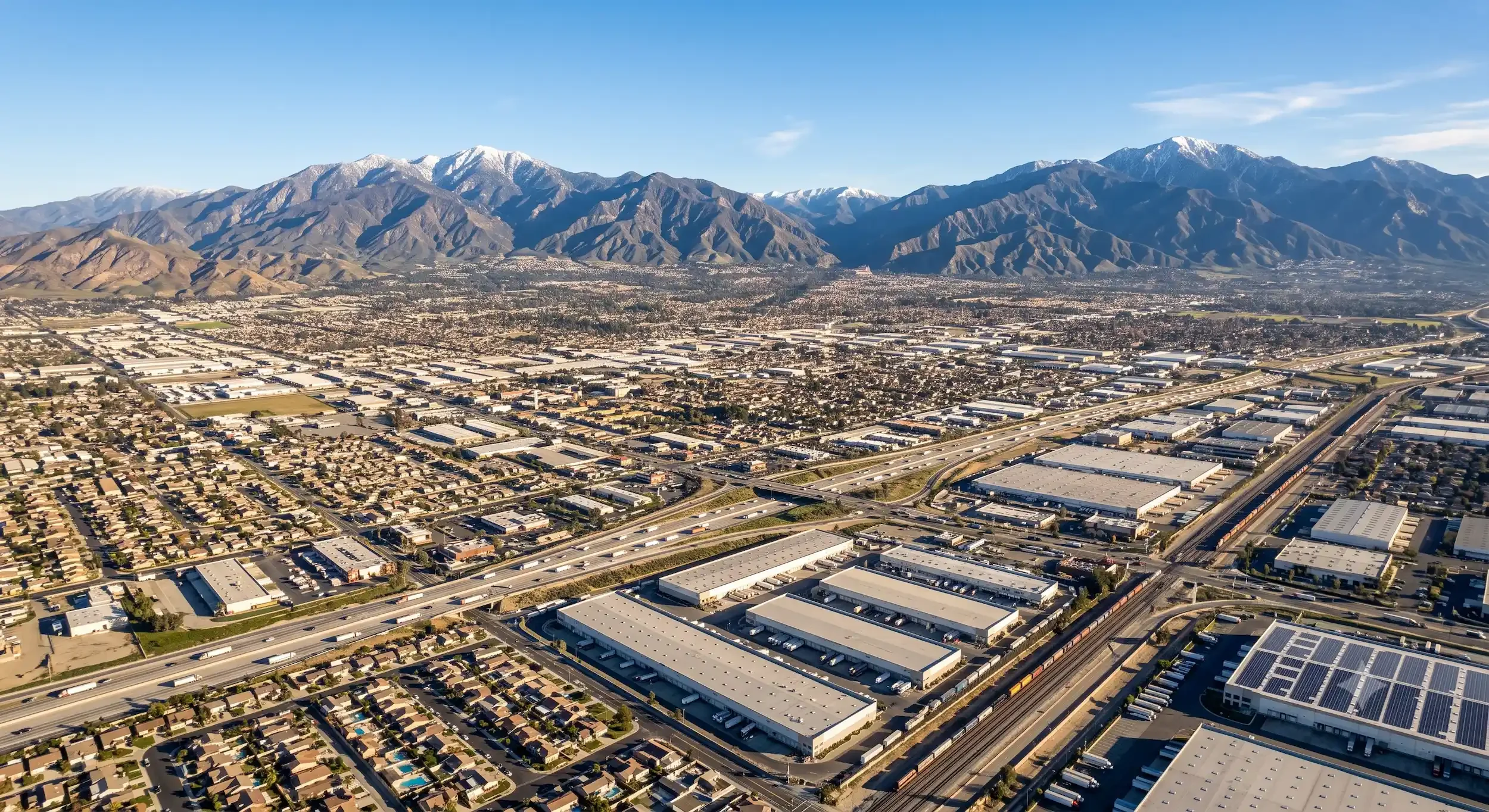
A Property Condition Assessment is the due diligence document behind every sound Inland Empire acquisition. Most PCAs are visual walk-throughs built to satisfy a minimum scope. Ours are forensic: a veteran facility executive, advanced diagnostics, and 350+ inspection points, delivered as a Property Condition Report your acquisition model can actually rely on, with a CapEx replacement reserve and an ongoing maintenance (OpEx) cost outlook built from the equipment we find on site. Built for buyers moving on warehouse, distribution, and big-box logistics across the Inland Empire, from Ontario, Rancho Cucamonga, and Fontana to Moreno Valley, Riverside, and Corona, in a market where rents and pricing have corrected off their peak. Get the real numbers before you close.

Who this is for
If you're buying, holding, or selling a commercial building anywhere in the Inland Empire, San Bernardino County or western Riverside County, a PCA is the document that tells you what that building will actually cost to own.
What we assess
Every assessment is scoped to the building, not a generic checklist. We work within the framework of ASTM E2018 and go beyond it, deploying forensic-grade diagnostic tools across over 350 specific inspection points to give you a grounded, evidence-based view of what could fail, roughly when it could become an issue, and what it could cost to address. In the Inland Empire that means reading concrete tilt-up warehouses, big-box distribution, and older downtown stock on their own terms, in a climate and a seismic setting that both leave a mark.
| Critical System | Forensic Focus | Typical Repair / Reserve Exposure |
|---|---|---|
| Roofing Systems | Membrane condition, seam integrity, drainage, flashings, and our estimate of remaining useful life. On IE distribution buildings, the roof can cover several acres, and Inland Empire heat and sun age single-ply membranes faster than a seller's brochure suggests, which makes roofing the single most common driver of underfunded replacement reserves. | $50,000 to $400,000+ |
| HVAC Systems | Age, condition, a thermal imaging scan, refrigerant type identified from the data plate, and our estimate of remaining useful life. In a market that runs office areas and any conditioned warehouse space hard through triple-digit summers, "operational" on a seller's log and a unit near the end of its expected service life are not the same thing. | $25,000 to $150,000+ |
| Electrical Capacity | Full panel survey including available amperage, switchgear condition, breaker condition, and grounding, measured against the building's intended use. This matters most for modern distribution and fulfillment: material handling, automation, refrigeration, and fleet or EV charging all lean hard on the building's power. | $15,000 to $80,000+ |
| Plumbing & Waste | We identify galvanized pipe, corroded cast iron, and non-compliant fixtures that can fail under commercial load, a common find in older downtown Riverside and San Bernardino stock, and belong in your immediate repairs table, not a surprise invoice. | $10,000 to $50,000+ |
| Seismic & Structural | Foundation, framing, and lateral-system condition. The Inland Empire is a seismically active region, with the San Andreas and San Jacinto faults running through the area, and its warehouse stock is largely concrete tilt-up, where wall-to-roof anchorage is a key thing to read. Older downtowns like Riverside, San Bernardino, and Redlands also carry unreinforced-masonry (URM) stock. Most IE cities have taken the URM-inventory route rather than adopting mandatory retrofit programs, so requirements vary by city; where we find URM, a soft-story condition, or tilt-up anchorage concerns, we note it, flag the exposure, and confirm the applicable city's current requirements for your further review. | $50,000 to $400,000+ |
| ADA & Accessibility | Observations and recommendations on potential accessibility barriers: path-of-travel, restrooms, entrances, and parking, along with unpermitted modifications we notice. Offered as recommendations to guide your own further review, and often found in older downtown, retail, and warehouse office areas, before they become the new owner's responsibility at closing. | $15,000 to $75,000+ |
| Fire-Life Safety | Sprinkler systems, alarm panels, and egress compliance, with particular attention to ESFR coverage and whether it fits the rack configuration and high-pile storage the building is actually used for. Deficiencies here can mean operational shutdowns, insurance exposure, and stalled permits. | $20,000 to $100,000+ |
| Thermal Imaging | We surface moisture intrusion and electrical hotspots that are completely invisible to the naked eye, and to a standard walk-through PCA, which matter more on the heavy power distribution that modern logistics buildings run. | $5,000 to $40,000+ |
Pricing
One engagement, scoped to your building and transaction. Send us the Inland Empire address and square footage, and you'll get a fixed quote before your diligence window narrows.
- On-site forensic inspection across 350+ points
- Full thermal imaging of electrical panels and building envelope
- Estimated useful life remaining on roof, HVAC, and major systems
- Electrical capacity and amperage survey
- Immediate Repairs & Deferred Maintenance cost table
- 5-Year Replacement Reserve (CapEx) forecast
- Operating & Maintenance (OpEx) cost outlook based on installed equipment
- Total Cost of Ownership snapshot (CapEx reserve plus OpEx)
- Property Condition Report (PCR) built for negotiation and closing
- Rush 48-hour delivery available
*Pricing is subject to standard commercial building types. Specialized facilities (e.g., wet labs, heavy manufacturing, cold storage) or complex sites may alter pricing. Please contact us for exact quotes.
What you get at the end
Not a binder of photos. A decision-grade document built for your acquisition model and your closing table.
How it works
Powered by our proprietary reporting tools, a forensic PCA goes from first call to final Property Condition Report in 7 to 10 business days. Need it faster for a tight Inland Empire close? Rush delivery is available.
Not buying? Leasing or acquiring a company?
The PCA is the buyer's document. If you're a tenant about to sign a Triple Net lease, the same forensic engine deploys as a Pre-Lease Facility Audit, scoped to the liabilities that transfer to you at signing. If you're acquiring a company whose value rides on its facilities, you need our Pre-Acquisition Quality of Infrastructure (QoI) Audit, built for M&A diligence windows and CapEx holdback negotiations.
Frequently Asked Questions
Get an Inland Empire PCA proposal in 24 hours.
Send us the property address, square footage, and your closing timeline.
We'll scope the assessment and get back to you before your diligence window narrows.